
Spicy • Street Food • Indonesian Classic
Nasi Goreng — Indonesia’s Famous Fried Rice
Smoky, spicy, slightly sweet fried rice packed with bold flavor — the kind of dish that hits instantly and keeps you coming back.
If you’ve never had Indonesian food, Nasi Goreng is the one that changes everything.
Smoky, spicy, slightly sweet — this is fried rice turned all the way up.
A quick story
When I moved to Bali with my ex, I had never tried Indonesian food. Not once. No idea what I was missing.
If you like spicy food — go to your nearest Indonesian restaurant now.
Over the next seven months, I ate my way through more dishes than I can count. Luckily, I kept a diary.
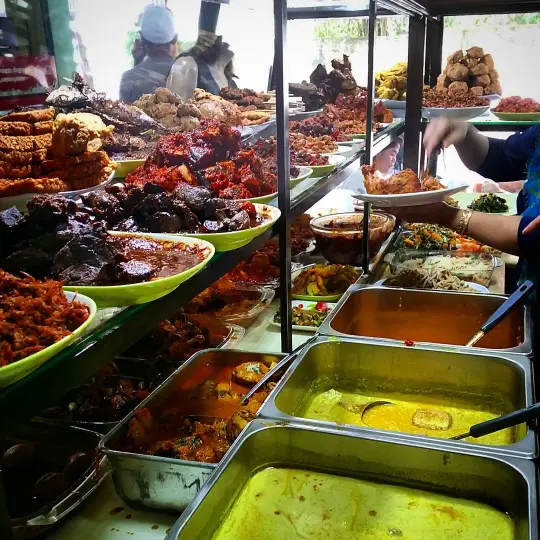
Living in Bali, I ate at a new warung almost every day. Warungs are small local eateries — cheap, crowded, delicious, and sometimes a little chaotic.
The word simply means “small shop” or “stall,” but it doesn’t really capture the experience. It’s fast, loud, and full of flavor — and that’s exactly where dishes like Nasi Goreng shine.
Indonesian fried rice
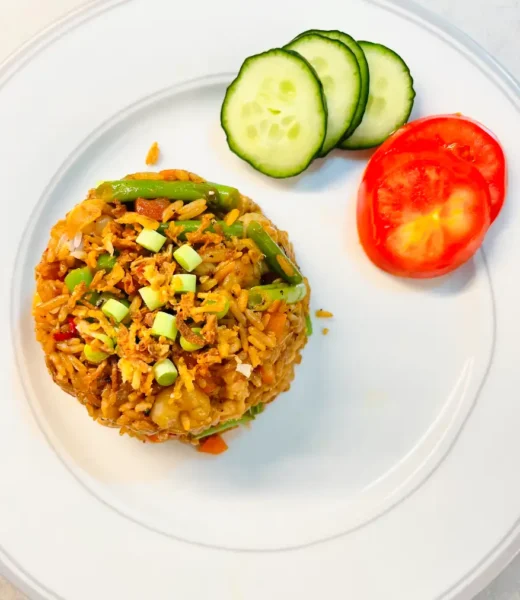
Let’s start with the national dish of Indonesia — the most well-known and universally loved: Nasi Goreng, which literally means “fried rice” in Indonesian and Malay.
Most places let you choose your protein — chicken, prawns, or both — with some vegetables mixed in and a small “salad” on the side.
And by salad, I mean a few slices of cucumber, a couple of tomato wedges, and maybe a single leaf of lettuce… if you’re lucky.
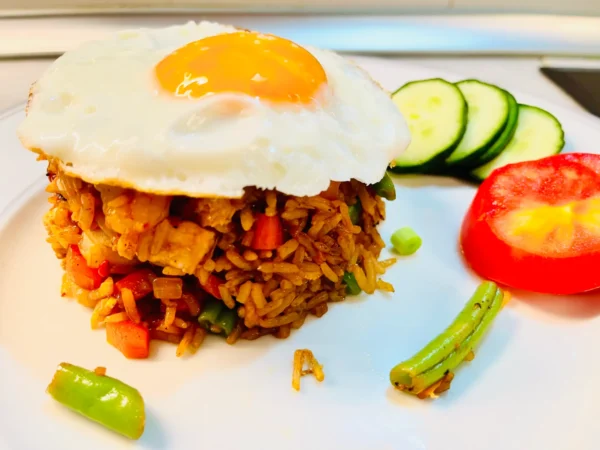
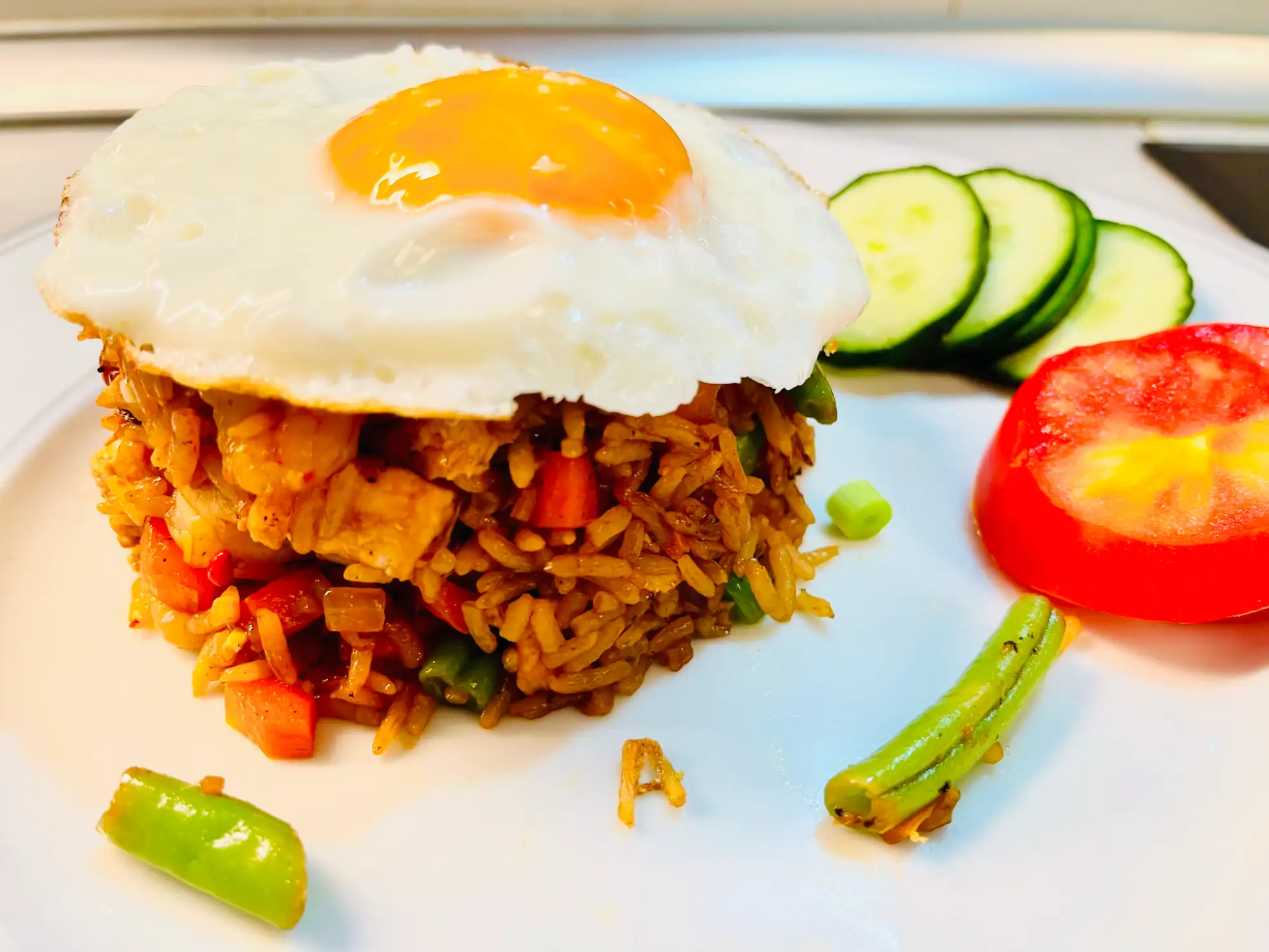
Traditionally, it’s served with a fried egg on top, sunny-side up. The yolk runs into the rice, creating those rich, saucy bites that everyone goes for.
You’ll find Nasi Goreng everywhere — from street carts and humble warungs to high-end beach resorts.
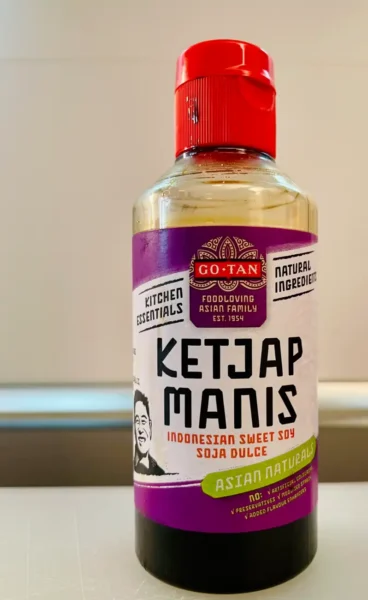
Flavor-wise, some versions include kecap manis, a sweet soy sauce that gives the rice its signature dark, slightly caramelized flavor. Others use terasi, fermented shrimp paste, for extra umami.
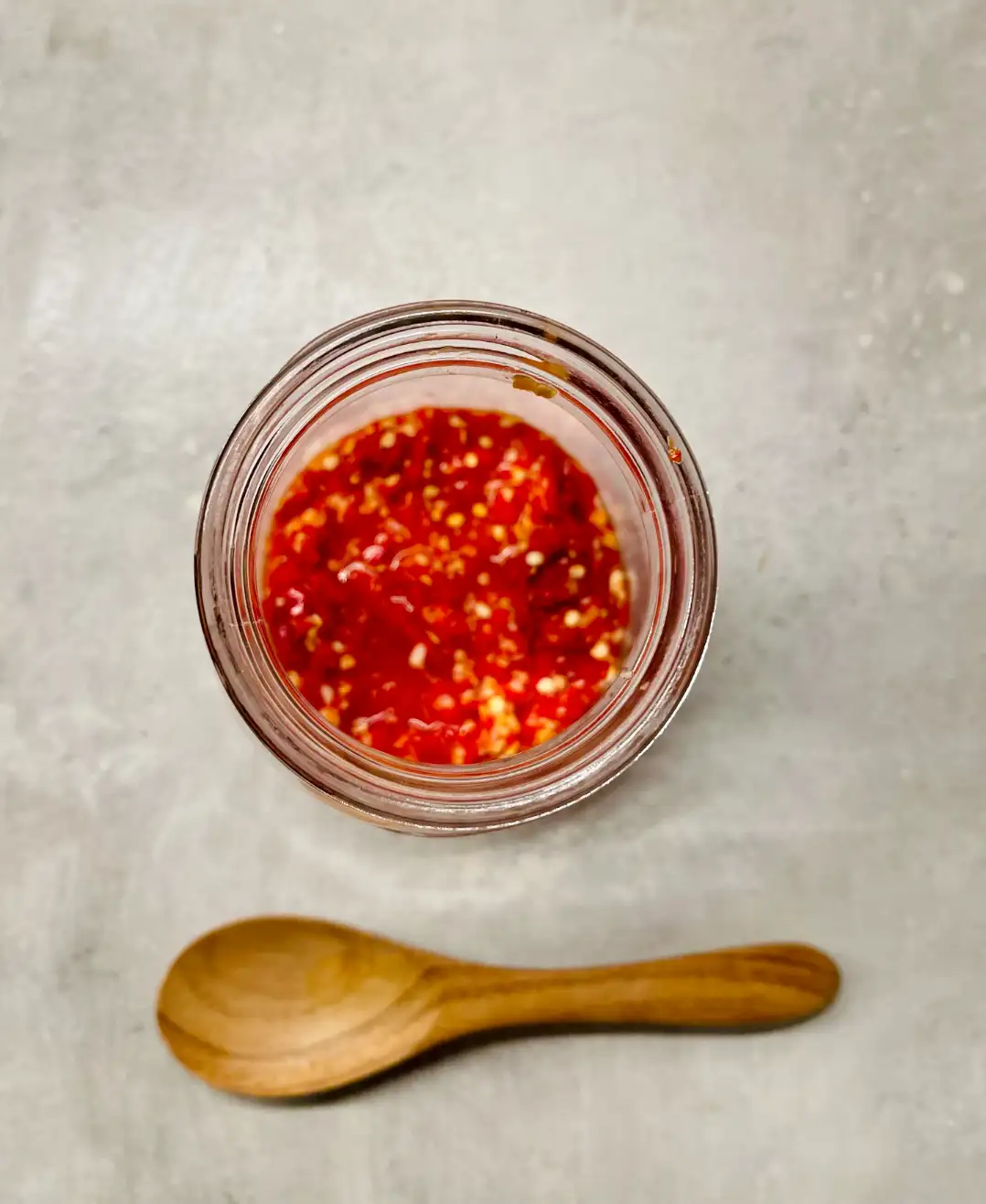
And then there’s sambal — Indonesia’s hot sauce — usually served on the side. Not all sambal is created equal, and the heat can vary wildly depending on the region, the cook, or the household. If you’re ever in Indonesia, Nasi Goreng is the dish to try.
Essential ingredient
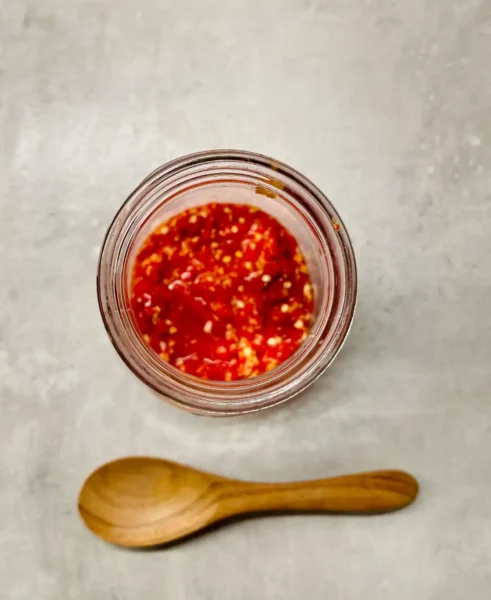
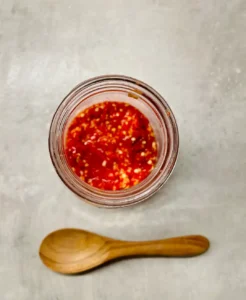
You can’t talk about Nasi Goreng — or Indonesian food in general — without talking about Sambal Oelek.
And no, there are no tomatoes in this sauce. Sambal oelek is made from chili peppers, rice vinegar, salt, and sometimes a touch of sugar or lime juice.
On a scale of 1 to 10, it’s usually an 11.
You rarely see anyone use more than a teaspoon at a time, but while it’s seriously hot, it also has real depth of flavor — not just heat for the sake of heat.
It’s addictive. And honestly, the store-bought versions never quite hit the same (at least in my experience). The good news? It’s incredibly easy to make at home — check out my sambal recipe here.
Why this recipe works
Why Nasi Goreng Works (And What Makes It Different)
Nasi Goreng isn’t just fried rice — it’s fried rice with a completely different personality. It works because it balances sweet, spicy, smoky, and deeply savory flavors in a way most other fried rices don’t.
Kecap manis changes everything
This sweet Indonesian soy sauce gives the rice its dark color and slightly caramelized, almost smoky sweetness — something you don’t get in Chinese or Thai fried rice.
Sambal brings real heat
Unlike most fried rices, this one has a noticeable kick. Sambal adds both spice and depth, not just heat.
High heat = smoky flavor
Proper Nasi Goreng is cooked hot and fast, giving it that slightly smoky, street-food flavor that makes it addictive.
The fried egg seals the deal
That runny yolk mixing into the rice adds richness and ties everything together in a way most fried rices don’t even try to do.
👉 The difference? Most fried rice is savory. Nasi Goreng is sweet, spicy, smoky, and rich — all at once.
Indonesian pantry staple
Kecap Manis: Indonesia’s Secret Sauce
Kecap manis is usually described as a “sweet soy sauce,” but that doesn’t really do it justice.
Yes, it’s thick, dark, and made with palm sugar — but there’s a lot more going on. It brings depth, richness, and a subtle complexity that goes way beyond just sweetness.
Calling it “sweet soy sauce” misses the point. It’s better thought of as a versatile, layered condiment that transforms whatever you add it to.
The easiest way to understand it? Think of it like Indonesian Worcestershire sauce — you don’t always notice it directly, but suddenly the dish has more umami, more depth, and just tastes better.
Step 1
Mise en Place — Get Everything Ready First
As always, start with your mise en place. This recipe has quite a few ingredients and a bit of prep, but once everything is ready, it comes together fast — about 10–15 minutes.
It’s also a flexible dish. I use it all the time to clean out the fridge — leftover vegetables, chicken, whatever you’ve got. Just keep everything cut to a similar size so it cooks evenly.
One more thing — a wok makes life easier. The depth gives you more room and control. That said, a large frying pan will absolutely do the job if that’s what you’ve got.
Flavor boost
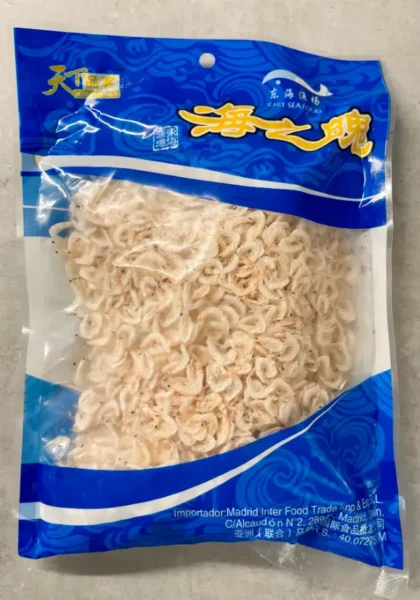
Who Knew Shrimp Could Be an Umami Bomb?
Dried shrimp is one of those secret weapons in Asian cooking. They’re small shrimp that have been sun-dried down to almost nothing — but the flavor is concentrated and intense.
I usually keep a bag in my freezer and use them as needed. You don’t need much — just a little adds a deep umami boost that you can’t quite put your finger on, but you’d miss if it wasn’t there.
If you don’t have dried shrimp, you can use shrimp paste instead. It gives a similar effect, just a bit saltier and more intense.
Fair warning — they smell a little funky. That’s part of the deal. It’s where the flavor lives.
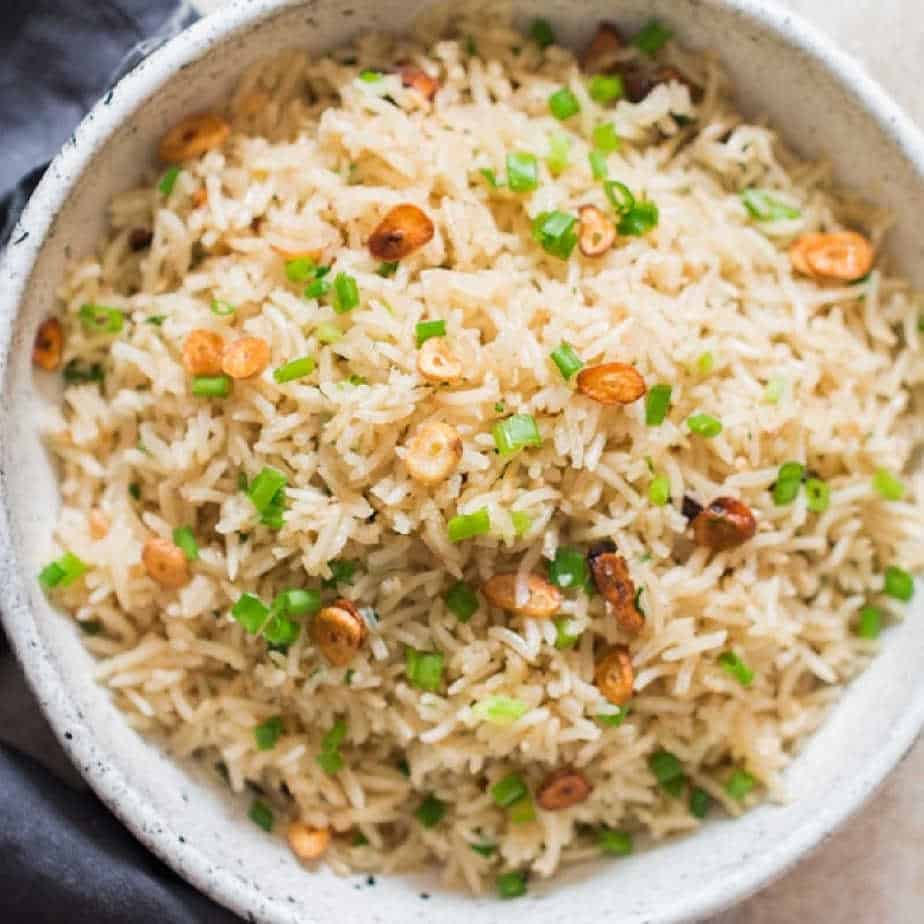
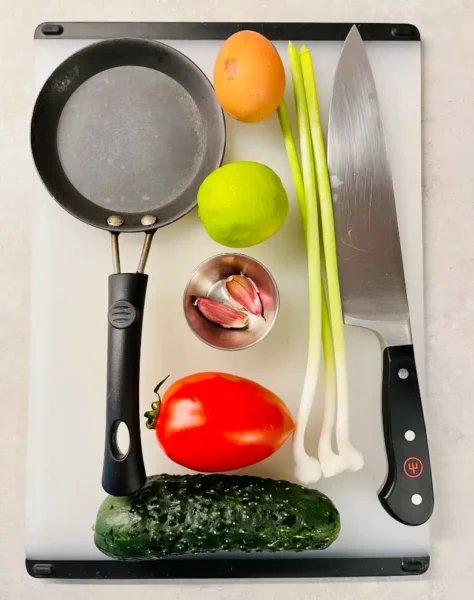
Nasi Goreng is typically served with a fried egg, crispy shallots, cucumber, tomato, prawn crackers, and a side of sambal — spicy, crunchy, fresh, and loaded with flavor in every bite.
Nasi Goreng: Indonesian Fried Rice Ingredients
Yes — there are a lot of ingredients. But if you’re using cooked chicken and/or shrimp, the dish comes together fast.
This is especially important when cooking in a wok. You’re working hot and fast, and everything gets added in a specific order — one after another.
The garnishes aren’t mandatory, but they do make the dish feel complete — and a lot more authentic.
Main Ingredients
- Cooked rice (basmati or jasmine), 1 day-old and refrigerated
- Chicken, cooked
- Eggs
- Shrimp — cooked if large, or raw if small (peeled and deveined)
- Red bell pepper (capsicum), chopped
- Shallots or onion, finely diced
- Red chilies, finely diced
- Kecap manis (sweet soy sauce)
- Soy sauce
- Dried shrimp or shrimp paste
- Spring onions, chopped
- Cooking oil (peanut, vegetable, or canola — not olive oil)
- Salt and white pepper to taste
Garnish & Sides (Optional but Recommended)
- Lime wedges
- Prawn crackers (krupuk udang)
- Fried shallots or fried onions
- Fresh cucumber and tomato
- Sambal (spicy chili sauce)
Prep everything first — once you start cooking, it moves fast.
Step 2
Build the Base — Hot Pan, Fast Start
Heat your pan or wok to medium-high. When it just starts to smoke, add your oil (about 2–3 teaspoons) and swirl to coat the surface.
Then go straight in with your onions — and in my case, red peppers.
This is where the flavor starts building. Let them cook for a minute or two until they soften slightly and pick up a bit of color.
You want heat, movement, and speed here — not slow cooking.
Step 3
Layer the Quick-Cooking Ingredients
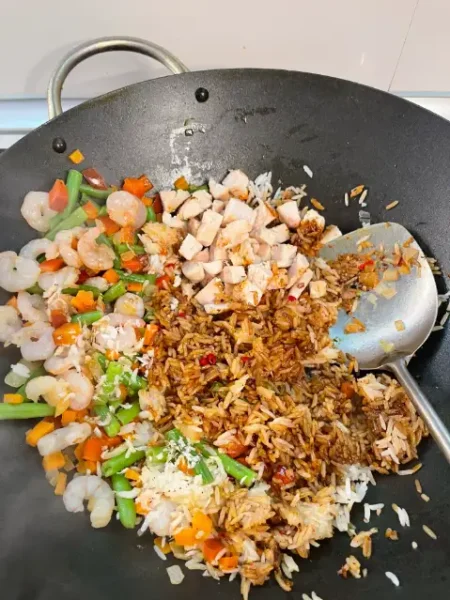
Once your vegetables start to soften — about 3–4 minutes — it’s time to move fast and build the next layer.
Add your green beans. If they’re frozen and thawed, they only need about a minute. Fresh green beans will take a bit longer — around 3–4 minutes.
Next, add your shrimp. They cook quickly — usually in 1–2 minutes — so keep things moving and don’t overcook them.
At this point, you’re close to the finish — everything from here comes together fast.
Step 4
Fry the Egg — Fast and Hot
Before we finish the Nasi Goreng, fry the egg. Turn up the heat and add about 1 teaspoon of oil per egg.
Fry it quickly so the bottom gets golden and slightly crispy while the yolk stays beautifully runny.
Ideally, you want a sunny-side-up egg with crisp edges and a yolk that runs into the rice when you break it.
Step 5
Bring It All Together & Plate
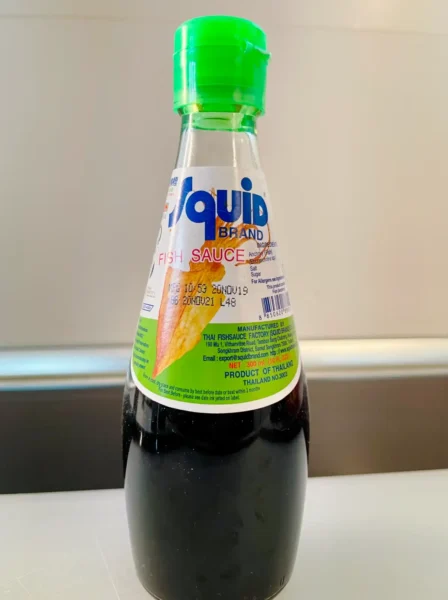
While the egg is cooking, add your pre-cooked chicken, kecap manis, soy sauce, and a splash of fish sauce to the pan.
The pan should be sizzling hot — this is where the magic happens. You want the kecap manis to caramelize slightly. You’ll know it’s happening when it thickens and starts to coat the rice.
Give everything a good toss, then drop the heat to low and taste. Adjust seasoning as needed.
When the egg is almost ready, plate the rice. Top with chopped scallions and crispy fried onions.
Add your classic “Indonesian salad” on the side — a few slices of cucumber and tomato — plus prawn crackers for scooping.
Serve with sambal on the side so you can dial the heat up as much (or as little) as you want.
Top with your fried egg, grab a spoon (the Indonesian way), and dig in.
Pro tips
Tips & Tricks for Perfect Nasi Goreng
Use day-old rice
Fresh rice is too soft and sticky. Cold, day-old rice fries up better and gives you that proper texture.
High heat is non-negotiable
You want a hot pan so the rice fries, not steams. That’s how you get that slightly smoky, street-food flavor.
Don’t overcrowd the pan
Too much at once drops the temperature and kills the texture. Cook in batches if needed.
Keep everything moving
Stir, toss, repeat. This is fast cooking — nothing should sit still for too long.
Balance the sauces
Kecap manis brings sweetness, soy sauce adds salt, fish sauce adds depth. Taste and adjust — don’t just dump and hope.
Prep everything first
Once you start cooking, there’s no time to chop. Have everything ready before the pan gets hot.
Hot pan, fast hands, balanced flavor — that’s Nasi Goreng.
Avoid these pitfalls
Common Mistakes to Avoid
Using fresh rice
Fresh rice is too soft and clumps together. You’ll end up with mush instead of fried rice. Always use cold, day-old rice.
Not enough heat
If your pan isn’t hot enough, the rice steams instead of fries. That smoky flavor? Gone.
Overloading the pan
Too many ingredients at once drops the temperature and kills texture. Work in batches if needed.
Overcooking the shrimp
Shrimp cooks fast. Leave it too long and it turns rubbery. Add it late and keep it moving.
Too much sauce
Dumping in too much kecap manis or soy sauce makes everything wet and heavy. You want coating, not drowning.
Skipping the egg
Technically optional… but not really. The runny yolk is what brings everything together.
Most problems come down to heat and balance — fix those, and the dish works.
Helpful answers
Nasi Goreng FAQ
What does Nasi Goreng mean?
Nasi Goreng literally means “fried rice” in Indonesian and Malay. It is one of Indonesia’s most famous and widely loved dishes.
What makes Nasi Goreng different from other fried rice?
Nasi Goreng is usually darker, sweeter, spicier, and more savory than many other fried rice dishes because of kecap manis, sambal, and often shrimp paste or dried shrimp.
Do I need day-old rice for Nasi Goreng?
Yes, day-old refrigerated rice works best. Fresh rice is usually too soft and sticky, which can make the fried rice mushy.
What is kecap manis?
Kecap manis is a thick Indonesian soy sauce with palm sugar and other flavors. It adds dark color, caramelized sweetness, and depth to Nasi Goreng.
Is Nasi Goreng spicy?
It can be. The spice usually comes from sambal or fresh chilies, but you can adjust the heat to your taste.
What do you serve with Nasi Goreng?
Nasi Goreng is often served with a fried egg, fried shallots, cucumber, tomato, prawn crackers, lime wedges, and sambal on the side.
Nasi Goreng: Indonesian Fried Rice
Ingredients
- 2-3 tablespoons Cooking oil Peanut, vegetable, canola – But NOT Olive Oil
- 2/3 cup onion chopped
- 2/3 cup red bell pepper sliced and chopped
- 2/3 cup carrots diced
- 1 cup green beans cut into 1 inch chunks
- 3 cups cooked jasmine rice 1 day-old and refrigerated
- 1/3 cup dried and frozen shrimp roughly chopped up
- 2/3 cup shrimp peeled and deveined
- 1 cups boneless chicken Sliced, shredded or cubed
- 2-3 eggs 1 per person
- 2-6 Thai birds eye chilies finely chopped (adjust to taste)
- 3 tablespoons kecap manis i.e., sweet soy sauce kecap manis is available at your local Asian grocer
- 2 tablespoons soy sauce
- 1 teaspoon shrimp paste available at your local Asian grocer or substitute 2 teaspoon fish sauce
- 1/4 cup spring onions sliced thin
- Salt and “white" pepper to taste
- Lime wedges for serving
- 2 cups prawn chips "krupuk udang" Side garnish
- 1 tablespoon Fried shallots or onions garnish
- Fresh cucumber and tomato slices for the 'salad' sliced
Method
- In a small bowl, mix together soy sauce, kecap manis, fish sauce, and white pepper.
- Heat a wok or large pan to medium high. When the wok starts to smoke add 1 Tbsp oil along the sides of it, so it runs down. The oil should coat the bottom of the pan. add chopped onion, sauté until soft – about 4-6 minutes.
- Add diced carrots and sliced bell pepper. Stir-fry until the vegetables are tender yet still crisp. About 4 minutes.
- Push the vegetables to one side of the wok, add a bit more oil if needed, and pour the cooked and cooled rice on the other side. Break up any clumps and mix the rice with the vegetables.
- Add shrimp, and cook for a minute, add chicken, and cook for a minute more
- Pour the sauce over the rice mixture and stir to combine evenly.
- In a separate pan, fry the eggs sunny-side-up, or however you like them.
- Serve the nasi goreng hot, topped with a fried egg on each portion.
- Serve prawn chips on the side for a crunchy texture.
- Arrange fresh sliced cucumber and tomato as a refreshing 'salad'. *See photo


That is the best fried rice i ever had. Thanks