Southeast Asian Essential
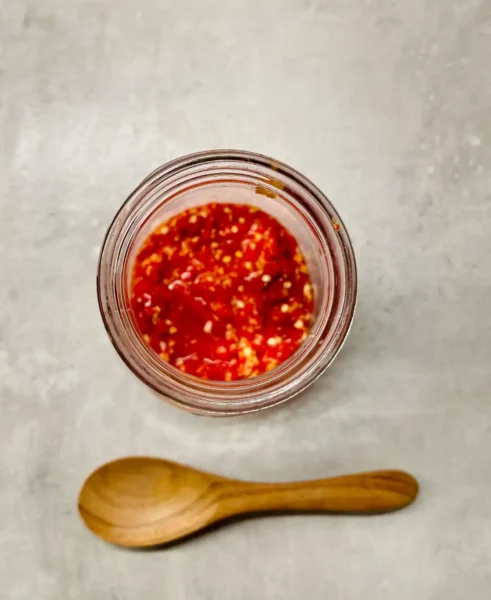
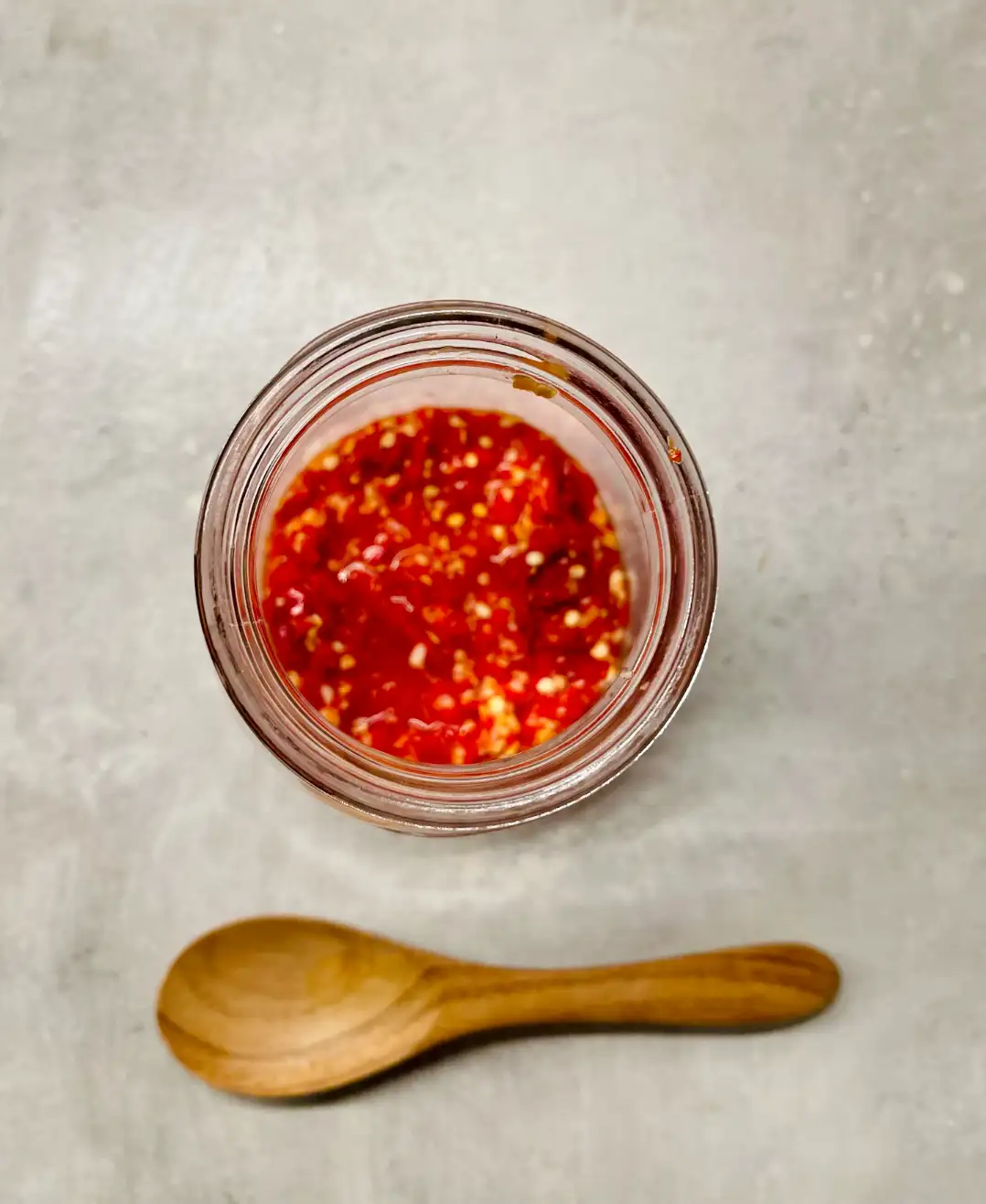
10-Minute Sambal Oelek
A bold, fiery chili paste that’s simple, raw, and packed with flavor — the backbone of Southeast Asian cooking.
Every Southeast Asian household — and restaurant — has its own version of sambal. Often more than one.
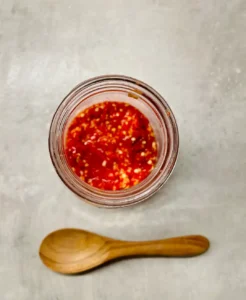
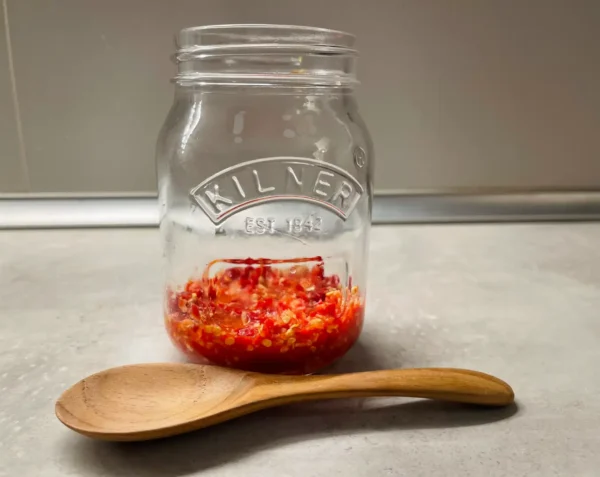
Sambal oelek is the most basic and essential: a raw chili paste traditionally made by grinding fresh chilies by hand.
And here’s the key: when people casually say “sambal,” this is usually what they mean.
Common Types of Sambal
Sambal oelek is only the beginning. Across Indonesia, Malaysia, Singapore, and the wider region, sambal changes depending on the chilies, aromatics, shrimp paste, sweetness, and cooking method.
Sambal Oelek: A basic sambal made from ground red chilies, salt, and vinegar. Versatile, sharp, and widely used.
Sambal Terasi: Made with shrimp paste, giving it a deep, funky umami flavor behind the chili heat.
Sambal Belacan: Similar to sambal terasi, but made with belacan — a Malaysian-style dried shrimp paste with its own strong personality.
Sambal Matah: A raw Balinese sambal made with shallots, lemongrass, lime leaves, galangal, and bird’s eye chilies. Fresh, bright, and aromatic.
Sambal Kecap: Chilies mixed with sweet soy sauce, or kecap manis. Spicy, sweet, sticky, and excellent with grilled foods.
Sambal Badjak: A cooked sambal with garlic, shallots, and sometimes tamarind. Richer, sweeter, and more rounded than raw sambal.
Sambal Goreng: A cooked sambal-style dish with onions, tomatoes, and sometimes meat or seafood. More like a spicy cooked preparation than a simple condiment.
Sambal ABC: A popular ready-made commercial sambal brand. Convenient, balanced, and easy to keep in the fridge.
👉 Think of sambal oelek as the foundation. Once you understand that, the whole sambal family starts to make sense.
Sambal Oelek Ingredients
This is as simple as it gets — a raw chili paste built on balance: heat, acid, salt, and a touch of sweetness.
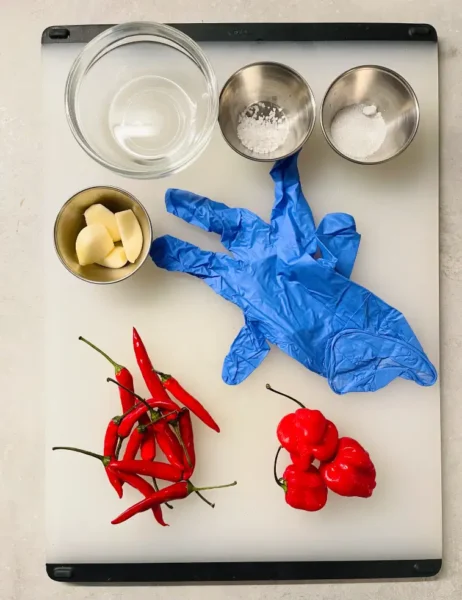
- 10–12 red chili peppers → adjust for heat level
- 4 cloves garlic → add more if you love it sharp
- 1 tbsp rice vinegar → or 2 tsp white vinegar (milder start)
- 1 tsp sugar
- ½ tsp salt → adjust to taste (usually up to 1 tsp total)
- Splash of lime juice (optional, but recommended)
👉 Taste as you go — sambal should hit spicy, salty, and slightly sharp all at once.
How to Make Sambal Oelek
Mise en place: Clear your workspace and gather everything. Wear kitchen gloves when handling chilies — this is not optional unless you enjoy pain later.
Blend or grind: Add chilies, garlic, vinegar, sugar, and salt to a blender, food processor, or mortar and pestle. Pulse until you get a coarse paste — not smooth.
Taste and adjust: Add lime juice if using, then taste. Adjust salt and vinegar until it hits spicy, salty, and slightly sharp all at once.
👉 Don’t overblend — sambal should have texture, not be a smooth sauce.
Prep the Chilies
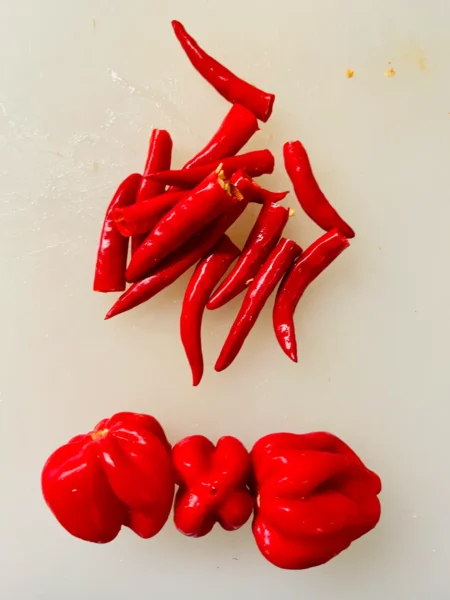
Wash the chilies, then decide your heat level: remove the seeds for a milder sambal, or leave them in for full intensity.
Red Thai chilies are the standard, but any spicy red pepper works. A mix (like red chilies + habaneros) gives you both heat and depth.
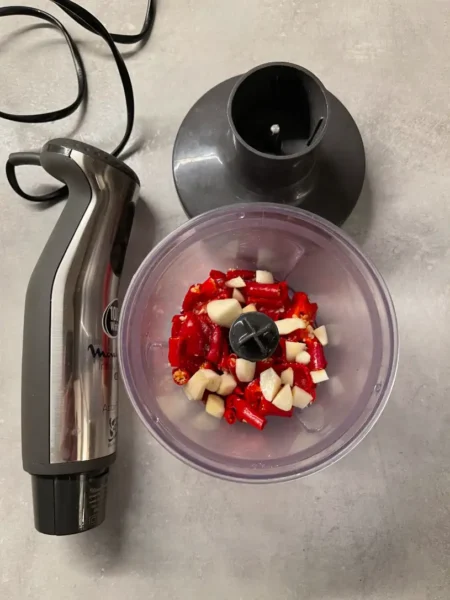
Roughly chop the chilies and garlic — just enough to help them break down evenly when blending. *** Wear gloves if you’re using habaneros — they linger
👉 Don’t overthink it — this is rustic. Rough cuts are exactly what you want.
Blend with Garlic
Add the chopped chilies, garlic, vinegar, and lime juice to a food processor (or mortar and pestle if you want to go traditional).
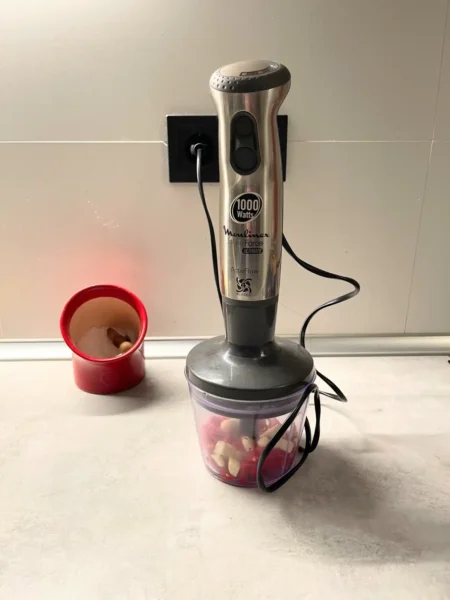
Pulse until you get a coarse, slightly chunky paste — not smooth.
If needed, add a teaspoon of water to help it move, but keep the mixture thick and textured.
👉 Texture matters — sambal should feel rough and punchy, not like a smooth sauce.
Finish & Adjust
Pulse until you reach a coarse, paste-like texture. You may need to add a tablespoon of water to help it come together — but keep it thick.
Taste and adjust the salt and sugar until it hits spicy, salty, and slightly sharp all at once.
For a brighter finish, add a splash of lime juice and stir. Not traditional everywhere — but it works.
👉 My rule: I always add lime. It lifts everything.
Pro tip: A mortar and pestle gives a deeper, more complex flavor — but a food processor gets you 90% there in a fraction of the time.
How to Store Sambal Oelek
Sambal oelek stores well — and actually improves slightly after a day as the flavors settle and deepen.
Refrigerator: Store in an airtight glass jar for up to 1–2 weeks.
Flavor development: The heat softens slightly and the flavors become more balanced after 24 hours.
Freezing: You can freeze sambal in small portions (ice cube trays work well) for longer storage.
👉 Pro move: make a batch, let it sit overnight, and use it the next day — it’s better.
Why Sambal Oelek Works
Versatile: Use it as a dipping sauce, marinade, or stir it into soups, noodles, and stews.
Intense: It delivers a clean, concentrated chili flavor — bold heat without unnecessary complexity.
Customizable: Making it at home means you control the heat, salt, acidity, and overall balance.
👉 Simple ingredients, big impact — that’s why this one belongs in your fridge.
Sambal Tips & Tricks
Play with chilies: Different varieties change everything — heat level, sweetness, and depth. Mix and match.
Balance matters: Adjust salt and sugar until it tastes alive — sambal should hit spicy, salty, and sharp all at once.
Let it rest: Give it a few hours (or overnight) in the fridge — the flavor deepens and rounds out.
👉 Use it on everything: grilled meat, roasted vegetables, noodles, rice — anywhere you want heat and flavor that actually hits.
Sambal Oelek FAQs
What is sambal oelek?
Sambal oelek is a simple Southeast Asian chili paste made from fresh chilies, garlic, vinegar, salt, and sometimes sugar.
Is sambal oelek very spicy?
It can be. The heat level depends on the type and quantity of chilies used. You can reduce the heat by removing seeds or using milder peppers.
Can I make sambal without a food processor?
Yes. Traditionally, sambal is made with a mortar and pestle, which produces a deeper flavor but takes more time and effort.
How long does sambal oelek last?
Stored in the fridge in an airtight container, sambal oelek will last 1–2 weeks. It can also be frozen for longer storage.
What can I use sambal oelek for?
Use it in stir-fries, marinades, soups, noodles, or as a condiment. It works anywhere you want heat, flavor, and a bit of acidity.
10 Minute Sambal Oelek
Ingredients
- 10-12 Thai bird's eye chilies adjust for preferred heat level
- 4 cloves of garlic (if you LOVE raw garlic, feel free to add more)
- 1 tablespoon rice vinegar (white vinegar works, but it is a little harsh, start with 2 teaspoons)
- 1 teaspoon sugar
- 1/2 teaspoon salt to start (keep adding until it pops, probably won’t need more than 1 full teaspoon)
- Splash of lime juice optional but good
Method
- Prepare the Chilies: (Any spicy pepper works, Thai bird's eye chilies are the standard)
- Wash and deseed the red chili peppers for a milder taste or leave the seeds for an extra kick.
- Chop the chilies coarsely.
- In a food processor, combine the chopped chilies with peeled garlic cloves.
- Pulse until you achieve a coarse texture.
- Add salt, sugar, and rice vinegar to the chili-garlic blend.
- Adjust salt and sugar to taste.
- Blend all ingredients until you achieve a smooth, paste-like consistency.
- For a citrusy twist, add a splash of lime juice and stir.
- I always add lime juice, not everyone does


That’s a mean sauce, but good flavor 🔥
Can i use habaneros? I grow them, and i am looking for some recipes. Thanks
Sure, feel free to experiment with whatever peppers you like. Each one has a different taste, and heat level. Habaneros, will have a great heat and flavor.