Bright • Fresh • Bold
Authentic Peruvian Ceviche
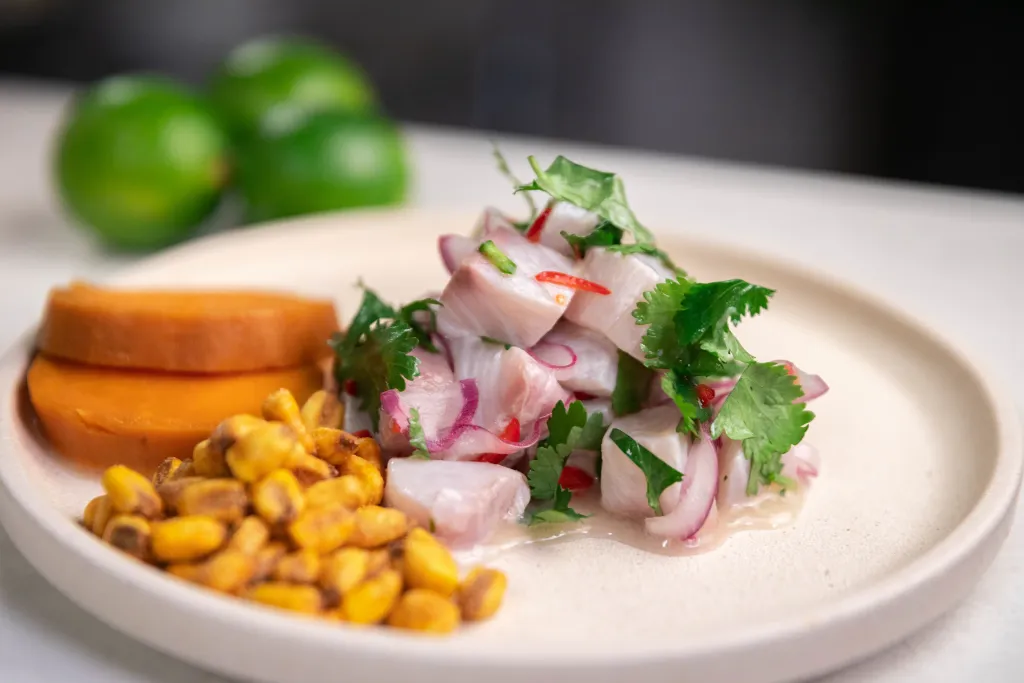
Fresh fish, sharp lime, heat from aji, and that unmistakable leche de tigre—this is ceviche the way it’s meant to be.
There are a lot of ceviche recipes out there—but this one might be my favorite.
The leche de tigre alone is enough to win you over. Combined with fresh fish, lime, onion, and chili… it just works. Harmony, bliss, happiness. I like mine with a bit of heat, but you can dial that up or down.
If you’re used to Mexican ceviche, this will feel different. Cleaner. Sharper. More focused on the fish and the acidity rather than heavier add-ins.
At its core, ceviche is simple: raw fish “cooked” in lime juice. The acid firms up the fish and brings everything together into something bright, fresh, and incredibly satisfying.
Peruvian ceviche takes that idea and refines it into something special—bold flavors, tight technique, and a balance that’s hard to beat.
When to make it
When This Ceviche Really Shines
This is one of those dishes that feels a little special—but it’s actually pretty easy once you understand the basics.
- Hot summer days — when turning on the stove sounds like a bad idea
- Dinner parties — it looks impressive, tastes even better, and comes together fast
- Date night at home — light, fresh, and a little elevated without trying too hard
- When you want something different — this is not your usual weeknight meal
It’s the kind of dish that makes people stop for a second after the first bite.
If this is your first time making ceviche, don’t worry—I’ll walk you through the key things to get right next.
Raw Fish Safety + Best Fish to Use
This is raw fish, so quality matters. A lot.
Always use the freshest, sushi-grade fish you can find. If you’re not sure, ask your fishmonger directly—they’ll tell you what’s safe to eat raw.
For ceviche, you want a firm, white fish that holds its shape and doesn’t fall apart in the lime juice.
- Sea bass (lubina) — one of the best options
- Corvina — traditional in Peru
- Halibut — firm and clean
- Snapper — slightly sweeter flavor
Avoid oily or delicate fish like salmon or tuna for this style—they don’t give you that clean, classic Peruvian texture.
The secret sauce
What Is Leche de Tigre?
Leche de tigre is the heart of Peruvian ceviche. It’s the liquid that forms when lime juice mixes with fish juices, chili, garlic, onion, and seasoning.
It’s bright, spicy, slightly salty, and incredibly addictive. In Peru, people don’t just leave it on the plate—they drink it.
This is what gives ceviche its punch. Without it, you just have marinated fish. With it, you get something layered, balanced, and alive.
Why it matters
- It carries all the flavor — acid, heat, salt, and aroma
- It “cooks” the fish — firming it without heat
- It defines the dish — this is what separates good ceviche from great ceviche
Get the leche de tigre right, and everything else falls into place.
Why this works
Why This Ceviche Works So Well
-
Balance is everything
You’ve got acid (lime), heat (aji), salt, and freshness all working together. Nothing dominates. -
The timing keeps it fresh
Peruvian ceviche is not meant to sit for hours. It’s lightly marinated so the fish stays tender, not rubbery. -
Leche de tigre ties it together
It’s not just marinade—it’s the flavor engine that brings the whole dish to life. -
Simple ingredients, precise technique
This isn’t complicated cooking—but small details (cut size, timing, seasoning) make a big difference. -
Clean, sharp flavor profile
Unlike heavier versions, this keeps the focus on the fish, the lime, and the spice.
When everything is balanced and timed right, ceviche feels fresh, bright, and almost addictive.
Common Mistakes (and How to Fix Them)
- Over-marinating the fish — This is the big one. Too long and the fish turns firm and rubbery.
Fix: Keep it short—just enough time to lightly “cook” the fish. - Using low-quality fish — You can’t hide bad fish here.
Fix: Always go fresh, clean, and sushi-grade when possible. - Too much lime juice — It overwhelms everything and kills the balance.
Fix: Use enough to coat, not drown the fish. - Cutting uneven pieces — Leads to inconsistent texture.
Fix: Cut the fish into evenly sized cubes. - Not enough seasoning — It can taste flat if you don’t adjust salt and heat.
Fix: Taste the leche de tigre before serving and adjust.
Quick Fixes
- Too sour? Add a pinch of salt or a touch of fish stock to balance it.
- Too spicy? Add more fish or a little extra lime juice to mellow it out.
- Fish too firm? Next time, marinate for less time—this one’s hard to reverse.
- Flat flavor? Add salt, chili, or a splash more lime to wake it up.
Traditional serving
How to Serve Peruvian Ceviche
In Peru, ceviche is usually served simple, clean, and very intentional. It’s not overloaded—it’s balanced.
- Sweet potato (camote) — adds sweetness to balance the acidity
- Peruvian corn (choclo) — large kernels, slightly starchy and mild
- Red onion — thinly sliced for crunch and sharpness
- Fresh cilantro — optional, but adds brightness
- Leche de tigre on the plate — always, and don’t waste it
It’s usually eaten immediately after preparing, while the fish is still fresh and the flavors are sharp.
My version
I keep it simple: fish, onion, heat, and plenty of leche de tigre. Sometimes I’ll add sweet potato if I want that classic contrast—but honestly, it’s great either way.
Frank's Banging Authentic Peruvian Ceviche
Ingredients
- Leche de tigre or 'Tiger milk'
- 5 coriander
- 2 cloves of garlic
- 1/2 inch ginger (peeled)
- 1 celery
- ¼ red onion
- limes Juice from 6
- 1 pinch black pepper
- 1-2 tsp salt - seems like a lot but it is needed
- 50 g raw, white fish If possible. Frozen will work
- Ceviche
- 200 g raw, white fish fresh if possible
- Lime juice from 3 limes
- 1/2 of prepared tigers milk
- 4 Aji peppers or Thai chilis
- 1-2 tbsp coriander fresh
- ¾ red onion
- Garnish
- 1/2 of iceberg lettuce
- ½ sweet potato - cooked and chilled you want to have about 4 golf ball sized portions of sweet potato. Save the rest for later.
- sweet potato chips or plantain chips
- 3 tbsp roasted salted corn nuts
- 1/4 cup hominy canned
Method
- Cut all of the onion into really thin slices and then rinse in water. Place the onions in a colander and let drain. Rinse the onion if you want a milder taste and smell.
- Finely chop the chili, coriander and ginger.
- Cut the celery stalk in half longways, and release the flavors by tapping it with the flat side of the knife. Chop the celery into small pieces.
- Boil or bake the sweet potatoes and corn, drain the water after boiling.
- Cut off the thinnest part of the fillet, which has a slightly whiter color, and set it aside for the tiger milk. This part is the fattiest and not suitable for ceviche. Fillet the rest of the fish and remove any bones with tweezers. Slice the fish thinly at a downward angle, like sashimi, into pieces of 1.5x1.5 cm.
- Rinse the lettuce and let it drain.
- Tiger milk:
- To make the 'tiger milk', add coriander, garlic cloves, ginger, celery, red onion, fish trimmed from fillet, salt, pepper and lime juice to a blender.
- Do not blend them yet. Wait for 5 minutes and then pour in the milk. Blend until smooth. Strain the cream and keep it in a bowl. Discard any solids that remain in the strainer.
- Ceviche
- Put the chopped trout in a bowl, salt to taste and stir well so that the salt is absorbed.
- **SALT THE FISH BEFORE YOU ADD THE SAUCE!**
- Add the lime juice and tiger milk, stir well. Add a pinch of chili and a pinch of coriander.
- Have a taste – does it need more salt?
- Finish with a handful of red onions. Serve directly with salad leaves, sweet potatoes and corn (hominy)
- Serve immediately. Fresh ceviche is essential. The lime will continue to 'cook' the fish as soon it touches the fish, and it will overcook and lose its texture if it sits too long, making it unappetizing.
Notes
FAQ: Authentic Peruvian Ceviche
Is ceviche safe to eat?
Yes—if you use fresh, high-quality fish. The lime juice helps firm the fish, but it does not replace proper food safety.
How long should ceviche marinate?
Only a short time—usually 5 to 15 minutes. Peruvian ceviche is meant to be fresh, not heavily cured.
What fish is best for ceviche?
Firm white fish like sea bass, corvina, snapper, or halibut works best.
What is leche de tigre?
It’s the flavorful liquid made from lime juice, fish juices, chili, and seasoning—it’s the heart of the dish.
Can I make ceviche ahead of time?
Not really. It’s best made and served fresh. If you prepare it too early, the fish will over-marinate and lose its texture.
Is Peruvian ceviche different from Mexican ceviche?
Yes. Peruvian ceviche is lighter, sharper, and focuses more on the fish and leche de tigre, while Mexican versions often include tomatoes, avocado, and longer marinating times.