Quick Gourmet Breakfast
Asparagus with Poached Egg and Parmesan
A simple, elegant dish that feels like something you’d order at a seaside café—fresh asparagus, a perfectly poached egg, and a shower of parmesan over warm toast.
This is one of those dishes that makes you feel like you’re on holiday.
Poached eggs always feel a little fancy—like you should be sitting at a beach resort somewhere, ordering breakfast with a coffee and no plans for the day. Add fresh asparagus and parmesan, and suddenly it feels like a proper restaurant dish.
But here’s the thing—it’s actually incredibly simple. This whole dish comes together in about 10 minutes, and once you get the hang of poaching eggs, it becomes one of the easiest ways to upgrade your breakfast or brunch.
The combination works because it’s balanced: crisp-tender asparagus, a rich runny yolk, salty parmesan, and warm toast to soak it all up. It’s light, satisfying, and just indulgent enough.
Whether you’re cooking for yourself or trying to impress someone, this is one of those recipes that looks like effort—but really isn’t.
Why this works
Why This 10-Minute Dish Works So Well
-
Perfect balance of textures
You get crisp-tender asparagus, a soft poached egg, and crunchy toast—all in one bite. -
Simple ingredients, strong flavors
There’s nothing complicated here, but each ingredient pulls its weight—fresh asparagus, rich egg yolk, and salty Parmesan. -
The yolk becomes the sauce
Once you cut into the egg, the yolk coats everything. No need for extra butter or oil. -
Fast but feels elevated
It comes together in under 10 minutes, but it looks and tastes like something you’d order at a café. -
Built for flexibility
You can adjust the cook on the egg, swap the bread, or add extras—but the core always works.
When to make this
- Weekend brunch when you want something better than basic eggs
- Hosting guests and want something that feels impressive but low effort
- Quick weekday breakfast that still feels put together
- Light lunch or dinner when you want something fresh but satisfying
Upgrade it
- Add prosciutto or jamón for a salty, savory boost
- Finish with lemon zest to brighten everything up
- Sprinkle chili flakes for a little heat
- Swap Parmesan for Pecorino for a sharper bite
- Add avocado to make it more filling and creamy
It’s one of those rare dishes that hits all the right notes: quick, simple, and just indulgent enough to feel special.
Tips & tricks
How to Nail the Perfect Poached Egg (Every Time)
-
Use fresh eggs
Fresher eggs hold together better. Older eggs spread and get wispy. -
Keep the water just below a boil
You want a gentle simmer—not bubbling chaos. Too much movement will break the egg apart. -
Add a splash of vinegar
This helps the whites set quickly and keeps everything neat (you won’t taste it). -
Create a gentle swirl
Stir the water lightly before adding the egg. This helps wrap the whites around the yolk. -
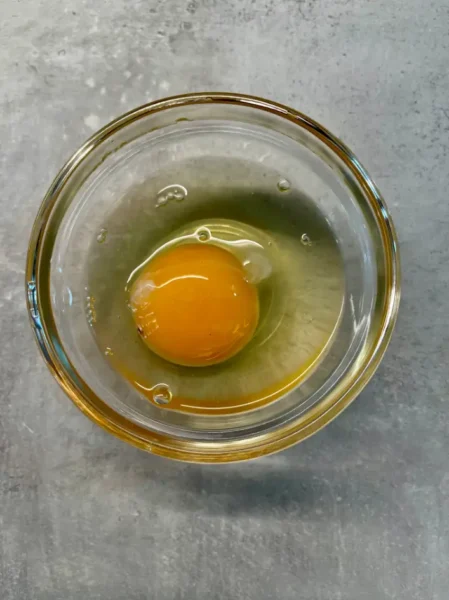
Crack into a small bowl first
Then slide it into the water. This gives you control and avoids broken yolks. -
Cook for 2.5–3 minutes
Whites set, yolk still runny—that’s the goal. -
Lift with a slotted spoon
Let excess water drain before plating.
Pro tip
Don’t stress about perfection. Even slightly messy poached eggs taste amazing—especially once that yolk runs over the asparagus and toast.
Rescue fixes
Quick fixes if things go wrong
-
Egg fell apart in the water?
Water was too hot or egg wasn’t fresh. Lower the heat and try again with a fresher egg. -
Wispy, messy whites everywhere?
Add a splash of vinegar and use a gentle swirl before dropping the egg in. -
Yolk overcooked?
Reduce cooking time by 30–45 seconds next time—pull it earlier than you think. -
Egg sticking to the bottom?
Give the water a quick stir right after adding the egg to keep it moving. -
Asparagus too soft?
You overcooked it—next time aim for bright green with a slight bite (usually 3–4 minutes max). -
Dish tastes flat?
Add a pinch of salt, a squeeze of lemon, or a little more parmesan to bring it back to life.
Making 10 Minute Poached Egg with Asparagus, Parmesan and Toast:
Step 1
Mise en Place — Set Yourself Up Properly
Before you start cooking, take a minute to get everything in place. This dish moves quickly, so having your ingredients and tools ready makes the whole process smooth and stress-free.
- Wash and trim the asparagus
- Grate or shave your parmesan
- Get your eggs ready to go
- Set out your pot, pan, and slotted spoon
- Toast or prep your bread
Clean your workspace, clear distractions, and even take out the trash if needed. A clean setup makes a simple dish feel easy—and a lot more enjoyable to cook.
Step 2
Prep & Cook the Asparagus
This dish is built on just a few ingredients—asparagus, eggs, parmesan, sourdough, butter, salt, and pepper—so how you handle the asparagus really matters.
Start by trimming the woody ends. The easiest way is to gently bend each spear until it snaps naturally—this removes the tough part while keeping as much of the good stuff as possible.
I like to steam the asparagus because it keeps the flavor clean and the texture just right, but you can also sauté, grill, or roast depending on your mood.
Cook for about 3–5 minutes, until the asparagus is bright green and tender with a slight bite. You’re not going for soft—you want it to still have a little life to it.
Step 3
Steam the Asparagus
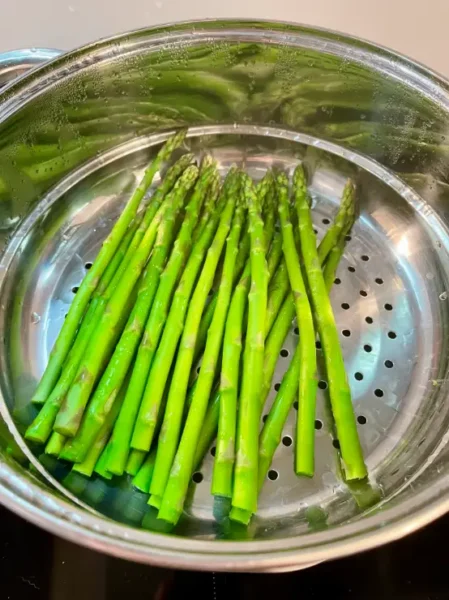
Rinse the asparagus under cold water and set aside while you prepare your pot.
Add about 2–3 inches of water to a large pot and bring it to a gentle boil. You don’t need aggressive heat—just enough steam to cook evenly.
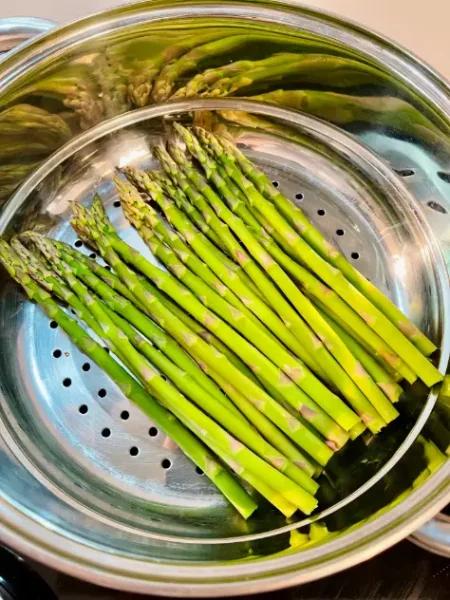
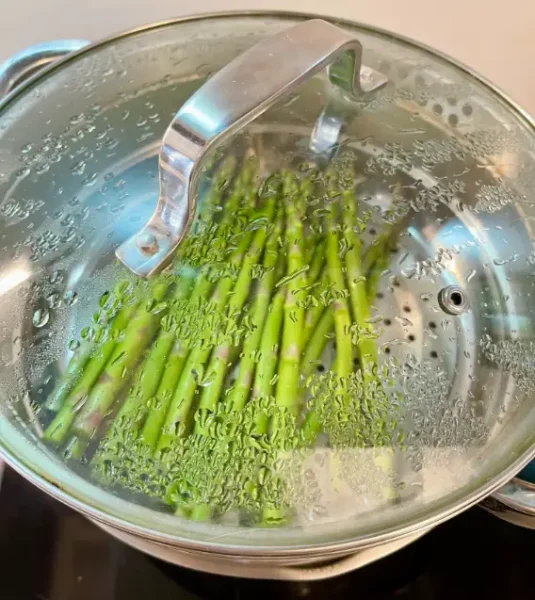
Place your steamer basket over the pot, add the asparagus, and cover with a lid.
Steam for 3–5 minutes, until the asparagus is bright green and just tender. It should still have a slight bite—overcooking here will make the whole dish feel flat.
Step 4
Prep for Poaching
While the asparagus is cooking, crack each egg into its own ramekin or small bowl. This makes it much easier to control when you add them to the water.
Once the asparagus is done, remove the steamer basket and set it aside. Reduce the heat so the water drops to a gentle simmer—just a few bubbles, not a rolling boil.
Add a small splash of vinegar (red or white wine vinegar both work well). This helps the egg whites set quickly and keeps everything neat.
Poaching the Eggs
Step 5
Poach the Eggs
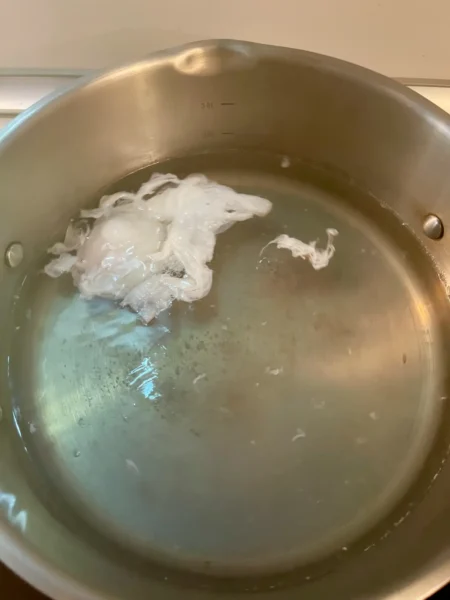
Use a spoon to create a gentle whirlpool in the simmering water, then carefully slide one egg into the center.
If you’re new to poaching, cook one egg at a time. It gives you more control and makes the process much easier.
The vinegar helps the whites set quickly, while the whirlpool keeps the egg moving so it doesn’t stick to the bottom of the pan—which is the fastest way to ruin a poached egg.
Cook for about 2–3 minutes, until the whites are set but the yolk is still soft and runny. Leave it a little longer if you prefer a firmer center.
Step 6
Toast, Plate & Serve
While the eggs are cooking, toast your sourdough and get your Parmesan ready to go—either shaved or finely grated with a microplane.
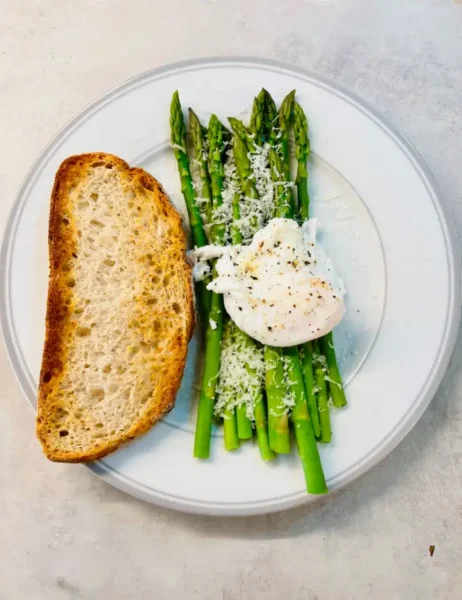
To assemble, place the asparagus on a plate, then gently lift the poached egg out with a slotted spoon and set it right on top.
Season with salt and pepper, then finish with a generous shaving of Parmesan. Serve with the toast on the side, ready to soak up that yolk.
The whole dish comes together in under 10 minutes, and it doesn’t need butter or oil—the richness comes from the egg and cheese.
A quick serving note
It looks best served with whole asparagus spears, but if you’re eating casually, feel free to cut them into smaller pieces—it’s much easier to manage.
This is one of my go-to breakfast dishes for guests. It feels a little elevated, but it’s simple, fast, and always delivers.
10 Minute Poached Egg with Asparagus, Parmesan and Sourdough Toast
Ingredients
Method
- Start by cutting off the woody ends of the asparagus, leaving as much ‘meat’ as possible. Rinse them in cold water and set aside. Bring a large pot of water with 2-3 inches of water in to to a gentle boil.
- Get out your steamer tray and add the asparagus to it, put it on the pot, and cover
- Cook the asparagus for a few minutes, until it is tender-crisp but still has a bit of bite. For the medium sized asparagus I was using it was about 3 minutes. Skiny asparagus can take ass little as 60-90 seconds, big thick asparaguys can take up to 5 minutes.
- While the asparagus is cooking, crack your eggs into a single ramikin each or small dishs.
- When the asparagus is finished, remove the steamer tray, and turn the heat down to a simmer, just a few bubbles, and add your vinegar. I like to use red or white wine vinegar.
- Create a gentle whirlpool in the water with a spoon, then carefully pour each egg into the center of the whirlpool. If you are new to poaching I suggest cooking just one at a time. It gives you more control and is just overall easier.
- The vinegar helps the eggs stay intact, and to set. The whirlpool keeps the eggs from sticking to the bottom of the pan.
- Let the eggs cook for about 2-3 minutes, until the whites are set but the yolks are still runny. Longer if you prefer.
- While the eggs are cooking, toast your bread. Get out your Parmesan cheese and cheese grater or microplane ready.
- To assemble the dish, place the asparagus on a plate, remove the poached egg with a slotted spoon, and top the asparagus with the poached egg(s). Salt and pepper. Shave some Parmesan cheese over the top of the dish, and serve it with the toast on the side. Ready to go in less than 10 minutes, and no need for butter or oil.
- *It looks better with whole asparagus, but it’s easier to eat if you cut it up.
FAQ: Asparagus with Poached Egg and Parmesan
How long does it take to make asparagus with poached egg?
This dish comes together in about 10 minutes, especially if you prep the asparagus, eggs, toast, and Parmesan before you start cooking.
What is the best way to cook the asparagus?
I like to steam the asparagus because it keeps the flavor clean and the texture crisp-tender. You can also sauté, roast, or grill it.
How do I keep poached eggs from falling apart?
Use fresh eggs, keep the water at a gentle simmer, add a splash of vinegar, and slide each egg into the water from a small bowl or ramekin.
Can I make this without toast?
Yes, but the toast makes the dish more satisfying and gives you something to soak up the runny yolk. Sourdough is my favorite.
What can I add to make it more special?
Try adding prosciutto or jamón, lemon zest, chili flakes, avocado, or swapping Parmesan for Pecorino.
When should I serve this dish?
It works beautifully for weekend brunch, hosting guests, a quick weekday breakfast, or even a light lunch or dinner.
What should I serve with it for brunch?
For a simple brunch plate, serve it with fresh fruit, roasted tomatoes, smoked salmon, a small green salad, or a good coffee.