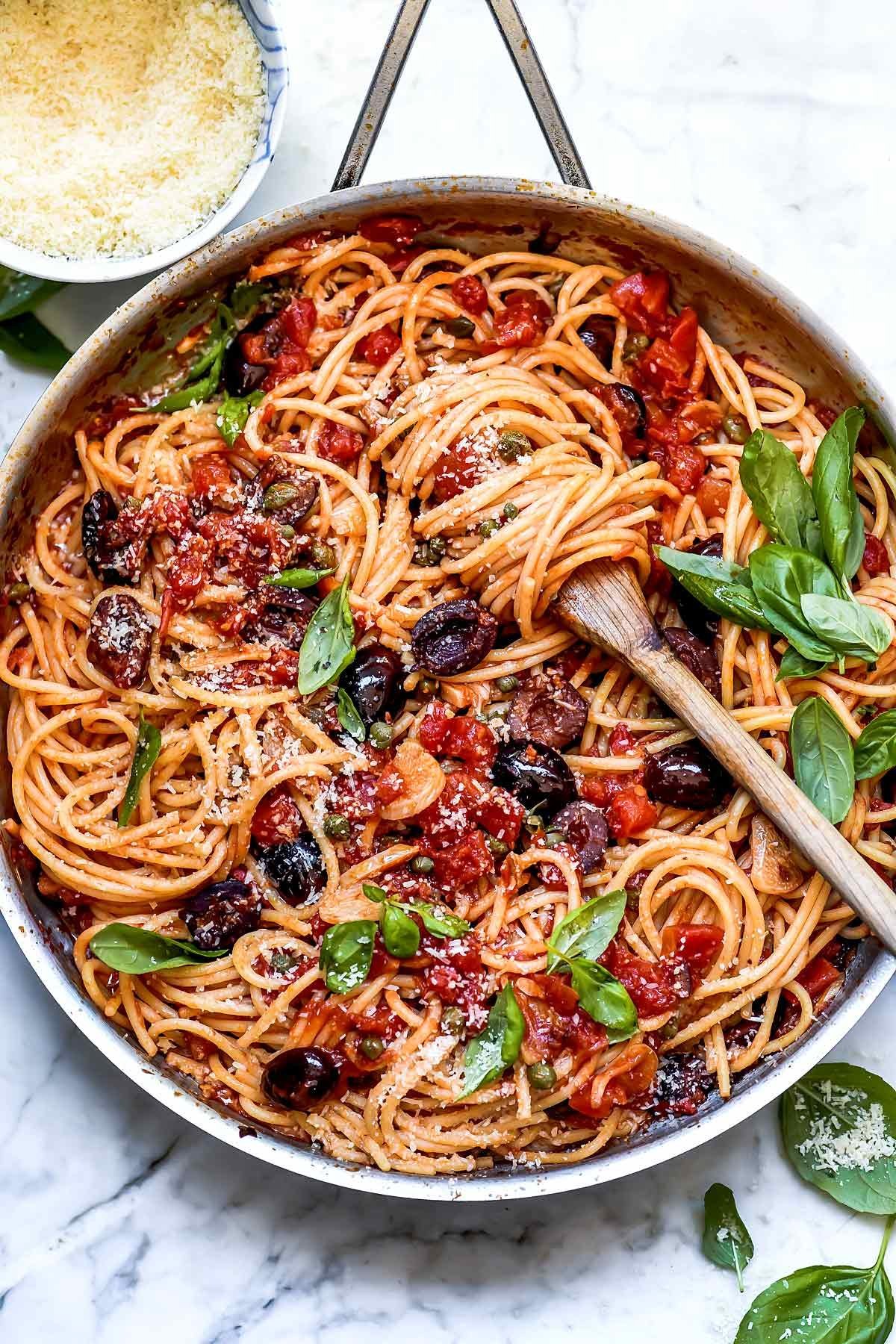
Bold Italian Pasta
Spaghetti with Puttanesca Sauce
Tomato, garlic, anchovies, olives, capers, and chili — a salty, punchy Italian flavor bomb.
If you find the statue of David scandalous, this may not be the pasta post for you.
Spaghetti puttanesca has a famously provocative name, a slightly messy origin story, and one of the most aggressive flavor profiles in Italian cooking.
👉 Anchovies are the secret weapon here — they melt into the sauce and take it from “fine” to damn good.
Even people who “don’t like anchovies” usually like them here, because they don’t taste fishy. They dissolve into the tomato sauce and add deep, salty umami.
Fast, cheap, loud, and unforgettable — exactly what a great pantry pasta should be.
If you think the statue of David is a bit much, this might not be the food blog for you.
Controversy surrounds the name "Pasta Puttanesca," derived from the Italian word "puttana," meaning "prostitute" in English.
👉 And yes — anchovies are non-negotiable.
People who “don’t like anchovies” tend to panic here. But they melt into the sauce and take it from ho-hum to damn. You can skip them… but you really shouldn’t.
At its core, puttanesca is a bold, punchy tomato sauce loaded with garlic, anchovies, olives, capers, and chili — a mid-20th century Neapolitan classic built on strong flavors and simple ingredients.
The name comes from puttana, and that’s where the stories start. One version claims it was a favorite among Naples’ sex workers, with flavors strong enough to keep things… efficient.
👉 Scandalous name. Simple ingredients. Serious flavor.
Whatever the real story is, one thing’s clear — this dish stuck around because it works.
Why Puttanesca Works
Puttanesca isn’t subtle — and that’s exactly the point. It works because it hits every major flavor lever at once.
This is where the punch comes from. Anchovies melt into the sauce, while olives and capers layer in sharp, briny intensity.
Tomatoes bring brightness and cut through the salt and richness, keeping the sauce from feeling heavy.
Anchovies dissolve into a deep savory base, boosted by garlic and olive oil. You don’t taste fish — just depth.
A touch of spice wakes everything up and keeps the sauce from feeling flat.
👉 Salt + acid + umami + heat — it’s loud, aggressive, and completely addictive.
Common Mistakes (and How to Avoid Them)
Puttanesca is fast and simple — but it’s also easy to push it too far. Here’s what trips people up.
Garlic goes from golden to bitter in seconds. Cook it gently and move fast once it starts to color.
Anchovies, olives, and capers already bring a lot of salt. Taste first — you may not need to add any extra.
If the sauce isn’t reduced, it won’t cling to the pasta. Let it simmer until slightly thickened and concentrated.
Heat should enhance, not dominate. Start light — you can always add more.
Soft pasta kills the texture. Cook it al dente and finish it in the sauce for best results.
👉 Control the salt, don’t burn the garlic, and let the sauce reduce — that’s the whole game.
Puttanesca Tips & Tricks
This is a fast pasta — but a few small moves make a big difference.
Don’t just toss them in. Let them dissolve in warm oil with garlic — that’s how you build the base flavor.
Light golden is perfect. Burnt garlic will ruin the entire sauce — no recovery.
A splash of starchy pasta water helps the sauce cling to the noodles and smooth everything out.
Let it simmer until slightly thick. You want concentrated flavor, not a watery tomato soup.
Olives and capers bring salt and bite — taste as you go so it doesn’t get overwhelming.
A drizzle at the end adds richness and rounds everything out.
👉 Build the base right, control the salt, and let the sauce tighten — that’s the difference.
Pasta Puttanesca FAQs
Do anchovies make the sauce taste fishy?
No. When cooked properly, anchovies melt into the sauce and add depth and umami — not a strong fish flavor.
Can I skip the anchovies?
You can, but the sauce will lose a lot of its depth. Anchovies are a key part of the flavor base.
Can I replace anchovies with tuna?
Yes — but it changes the dish. Tuna doesn’t melt into the sauce like anchovies. Instead, add it at the end for a chunkier, protein-rich variation (still delicious, just different).
What pasta works best with puttanesca?
Spaghetti is the classic choice, but any long pasta like linguine works well.
Can I make it less salty?
Yes. Reduce the amount of olives or capers, and avoid adding extra salt until the very end.
Spaghetti With Puttanesca Sauce (Literally - Whore Sauce)
Ingredients
- Salt to taste
- 3 Tbsp EVOO
- 6 or more cloves garlic lightly smashed and peeled
- 6 or more anchovy fillets
- 28 ounce can whole plum tomatoes
- Freshly ground black pepper to taste
- ½ cup pitted black olives preferably oil-cured
- 2 Tbsp capers
- Crushed red pepper flakes to taste
- 200 g Spaghetti or linguine (dry weight)
- 1 can oil packed tuna
- Chopped fresh parsley oregano, marjoram or basil leaves for garnish, optional
Method
- In a pot, bring some water to a boil and add salt. In a skillet over medium-low heat, heat oil with garlic, pepper flakes and anchovies. Stir occasionally until the garlic turns light golden.
- Open the can of tomatoes and squeeze them with a fork or your hands. Transfer them to a skillet and season with salt and pepper. Increase the heat to medium-high and cook, stirring now and then, until the tomatoes are soft and the sauce is thick, about 10-12 minutes. Add the olives and capers, reduce the heat, and let it simmer.
- Follow the directions on the pasta package and cook it until it is al dente, which means tender but not mushy. Stir the pasta occasionally while it cooks. After draining the pasta, toss it with the sauce and one more tablespoon of oil. Add more salt, pepper, or other seasonings if needed. Sprinkle some herbs on top for extra flavor and serve.